

Cervical disc herniation is a condition in which the intervertebral discs in the neck degenerate or move out of place and start to compress the nerve roots. Physical therapy for cervical disc herniation is widely used to reduce pain, decrease muscle spasm, prevent nerve compression and restore functional movement. In this article you will find detailed information about manual therapy in cervical disc herniation, physiotherapy-based rehabilitation and other non-surgical treatment options.
At Fizyonet Istanbul Physiotherapy Clinic, located in Metropol Istanbul Mall in Ataşehir, our approach is based on current scientific guidelines and individual assessment rather than one-size-fits-all protocols.
Physical Therapy Methods in Cervical Disc Herniation
The most commonly used conservative (non-surgical) physical therapy approaches for cervical disc herniation include:
1. Manual Therapy and Mobilization Techniques
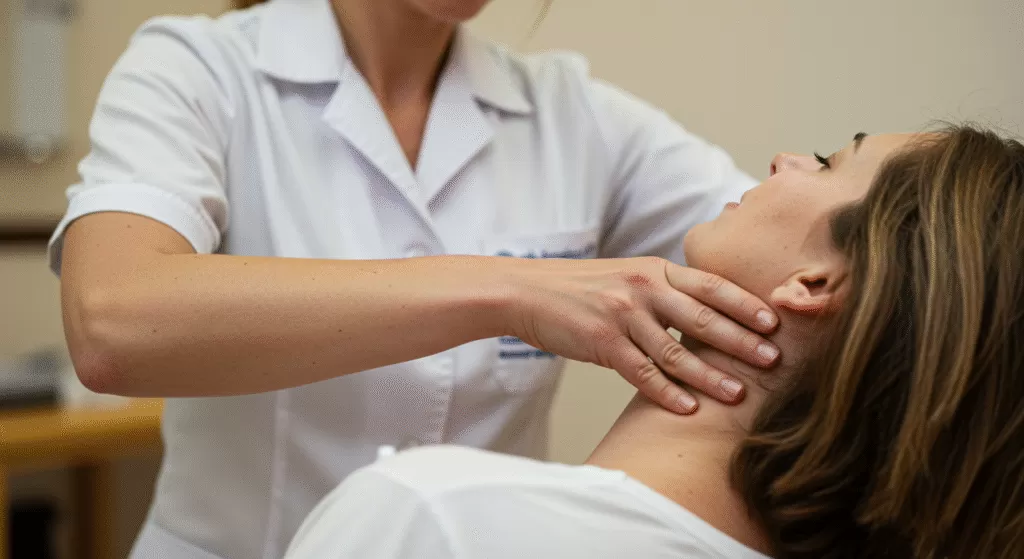
Manual therapy consists of specific joint and soft-tissue techniques applied by physiotherapists to reduce muscle tension and improve joint mobility (Kaltenborn et al., 2016).
- Spinal mobilization is used to normalize segmental motion of the cervical spine and to reduce mechanical pressure on the nerve root.
- Soft-tissue techniques help release muscle spasm and myofascial tightness, which often contribute to pain and protective guarding.
- Craniosacral and gentle manual techniques may support local circulation around the cervical spine and help decrease pain (Uthaikhup et al., 2017).
Scientific evidence: Meta-analyses on physical therapy for cervical disc herniation show that manual therapy can significantly reduce pain and improve range of motion and disability scores (Martinez-Segura et al., 2019).
2. Cervical Traction (Decompression)
Cervical traction aims to increase the intervertebral space and reduce mechanical compression on the nerve root.
- Mechanical traction applies a controlled, measurable pulling force through a device.
- Manual traction is performed by the physiotherapist and allows very precise adjustment according to the patient’s symptoms.
Scientific evidence: Randomized controlled trials indicate that mechanical traction can be effective in reducing pain in patients with chronic neck pain and radicular symptoms (Joghataei et al., 2018). However, in advanced nerve compression or progressive neurological deficit, traction must be applied with caution and only after specialist evaluation.
3. Exercise Therapy
Well-designed exercise programs for cervical disc herniation play a key role in restoring muscular balance, improving posture and protecting the spine in daily life.
- Isometric neck exercises help strengthen deep and superficial neck muscles without excessive movement.
- Stabilization and motor-control exercises regulate load sharing on the cervical segments and improve neuromuscular control.
- Stretching exercises reduce muscle stiffness and increase range of motion in the neck and upper back.
Scientific evidence: Adding exercise therapy to physical therapy programs can provide more than 50% improvement in pain and functional limitation scores in many cervical disc patients (Gross et al., 2019).
4. Electrotherapy and Other Physical Modalities
Electrotherapy modalities such as TENS, ultrasound and laser therapy are often used as supportive methods for pain control.
- TENS (Transcutaneous Electrical Nerve Stimulation): Helps modulate pain signals and may provide short-term relief.
- Laser therapy: May contribute to tissue healing and reduction of inflammation (Glazov et al., 2016).
Scientific evidence: Studies on physiotherapy for cervical disc herniation suggest that laser and other electrotherapy modalities can be effective for short-term pain relief, but their long-term effects are still not as strong as exercise and manual therapy (Chow et al., 2019).
When Is Physical Therapy Recommended or Contraindicated?
For many patients with mild to moderate cervical disc herniation, physical therapy is considered a first-line treatment. However, careful screening is essential before starting any program.
✅ Situations Where Physiotherapy Is Usually Recommended
- Mild to moderate disc herniation without severe neurological deficit
- Radicular pain without progressive muscle weakness or significant reflex loss
- Patients who can actively participate in exercise therapy and lifestyle modification
❌ Situations Where Physical Therapy Should Be Avoided or Delayed
- Advanced nerve compression with marked muscle weakness, loss of hand function or gait disturbance
- Symptoms suggesting spinal cord compression (myelopathy), such as loss of balance or bowel–bladder dysfunction
- Fracture, active infection, tumour or severe osteoporosis in the cervical spine area
Scientific evidence: Non-surgical treatment can still lead to recovery in a high percentage of patients. Studies report that up to 85% of patients with cervical disc herniation treated conservatively show significant improvement within six months (Hernandez et al., 2020).
Duration and Expected Effects of Physical Therapy
The duration of physical therapy for cervical disc herniation depends on symptom severity, irritability of the condition and the patient’s general health status.
- Acute and mild cases: Noticeable improvement is often seen after 2–6 weeks of regular treatment focusing on pain control, manual therapy and early exercise.
- Chronic or recurrent cases: Usually require 8–12 weeks of structured rehabilitation including progressive loading, postural training and ergonomic education.
Scientific evidence: Long-term follow-up studies show that 12 weeks of structured exercise-based physiotherapy can lead to functional improvement in approximately 70% of cervical disc patients (Peterson et al., 2018).
Benefits of Physical Therapy in Cervical Disc Herniation
- Reduction of neck and arm pain by decreasing mechanical and inflammatory stress on the nerve root
- Improved muscle strength, posture and motor control around the cervical spine
- Increased range of motion and return to daily activities, work and sports
- Lower risk of recurrent disc problems and postural disorders through education and self-management strategies
Conclusion
Physical therapy plays a central role in the non-surgical treatment of cervical disc herniation. Evidence-based manual therapy, traction when indicated, individualized exercise programs and selected physical modalities can significantly reduce pain and improve function for many patients. However, each case should be assessed individually and red-flag symptoms must always be excluded before starting treatment.
At Fizyonet Istanbul, our physiotherapists combine manual therapy, spinal decompression and individualized exercise programs to offer a comprehensive, science-based approach for patients living in Istanbul and for international visitors staying on the Anatolian side of the city.
Frequently Asked Questions
How is physical therapy for cervical disc herniation applied at Fizyonet Istanbul?
Instead of routine hospital-type electrotherapy only, we combine manual therapy, mobilization, cervical traction and individualized exercise protocols. The goal is not just to mask the pain, but to reduce the mechanical pressure on the nerve and restore healthy movement patterns.
Is manual therapy effective for cervical disc herniation?
Yes. When applied by a trained physiotherapist, manual therapy can reduce muscle spasm, improve joint mobility and create more space around the irritated nerve root. In many cases, patients report a noticeable decrease in arm pain and neck stiffness after a short series of sessions.
How many sessions are usually needed?
The number of sessions depends on symptom severity, but many of our patients experience meaningful improvement within 3–7 sessions of combined manual therapy and exercise. Chronic or long-standing problems may require a longer rehabilitation plan.
Can physiotherapy completely cure a cervical disc herniation?
In early and moderate stages, evidence-based physiotherapy can stop progression, reduce nerve compression and help the disc heal over time. Our aim at Fizyonet is to address the root causes – posture, load management and motor control – rather than only treating symptoms.
This article is for educational purposes only and does not replace a medical examination, diagnosis or treatment. If you have red-flag symptoms such as severe weakness, loss of balance or bowel–bladder problems, please seek urgent medical attention.
References
- Cohen SP et al. (2021). The role of physical therapy in cervical disc herniation.
- Carreon LY et al. (2019). Non-surgical management of cervical disc disease.
- Kaltenborn FM et al. (2016). Manual therapy techniques for the cervical spine.
- Glazov G et al. (2016). Low-level laser therapy for neck pain.
- Gross AR et al. (2019). Exercise therapy for chronic neck pain: systematic review.
- Hernandez et al. (2020). Outcomes of conservative treatment in cervical disc herniation.
- Peterson C et al. (2018). Effectiveness of exercise therapy in patients with cervical disc herniation.